
U.S. Listings Resource Center
The U.S. IPO Timeline — and the Team That Runs It
Part of the AUM guide: IPO & Public Company Readiness
There is no standard IPO timeline; there is a standard set of reasons timelines slip. Market conditions are the factor you cannot control. Preparation is what you can.
A company that arrives at the organizational meeting with its audit substantially complete, a business plan counsel can draft from, a clean legal structure, and underwriters selected can realistically price 135–160 days later. A company missing any of those starts the clock only when it stops missing them — which is why "how long does an IPO take" has two honest answers: about five months, and about eighteen.
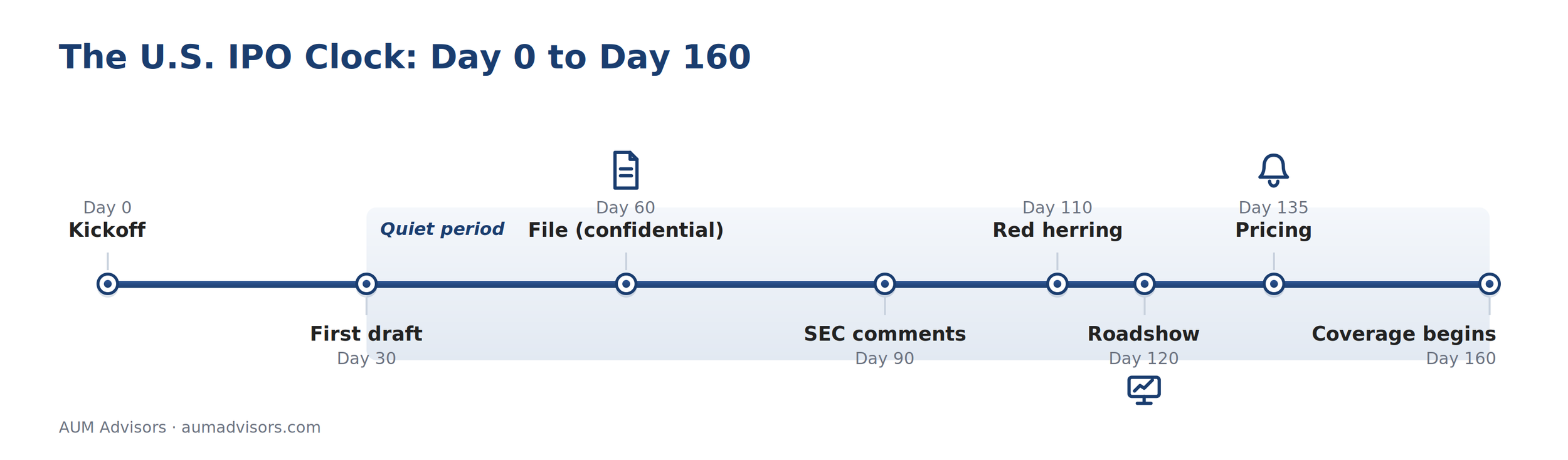
The Clock: From Kickoff to Close
- Day 0 — Kickoff. Timetable set, diligence launched, data room opened, registration-statement sections assigned, communications policy set before anyone gives an interview they will regret.
- Day 30 — First drafting session. Corporate housekeeping underway; ticker reserved; printer, transfer agent, and — for ADS structures — depositary selected.
- Day 60 — First filing. Board approval, auditor comfort letter, registration statement filed — confidentially, for EGCs and most FPIs.
- Day 90 — SEC comments. First letter typically within 30 days; respond, amend, repeat until substantive issues clear. The number and depth of comments sets the pace from here.
- Day 110 — Red herring. Final comments resolved, price range set, preliminary prospectus printed.
- Day 120 — Roadshow. Two weeks; the book builds.
- Day 135–139 — Pricing, effectiveness, closing.
- Day 160 — the post-effective quiet period expires and coverage initiates.
The quiet period deserves its own warning: it begins 30 days before the first public filing and runs 40 days past effectiveness, and media published inside it can count as a written offer even if the interview happened earlier. The cheapest insurance in the whole process is a communications policy, set at kickoff, that management follows rigorously.
Choosing Underwriters — The Beauty Contest
The beauty contest runs both directions: banks are underwriting their reputations, and they only want deals they expect to work.
From the issuer's seat, five things matter more than the valuation a pitch book flatters you with.
- The analyst — who will live with your stock for years; ask fund managers whose research they read, and make sure the enthusiasm is real, because a lukewarm analyst drops coverage and orphans the stock.
- Scale fit — a bulge-bracket name adds prestige to a large deal and neglect to a small one; a bank that lives in small-cap institutional accounts may serve a $75 million offering far better.
- Industry and geographic knowledge — bankers who have completed multiple offerings in your industry will have a much shorter learning curve when it comes to positioning your story, refining KPIs, and identifying the institutional accounts that matter most for your story. Certain geographic regions have very specific regulatory and tax considerations and you don't want your deal to be the first journey through that learning curve.
- Distribution — institutional versus retail reach, and geographic reach that matches where your natural investors sit.
- Commitment structure — firm commitment versus best efforts, which on small deals is the difference between a priced offering and a selling effort that may not clear listing requirements.
Never pick the bank promising the highest preliminary valuation; pick the one whose questions prove it understands how institutions will model you.
The Rest of the Deal Team
- SEC counsel drafts and owns the registration statement; hire a firm regularly active in IPOs from your region, under a senior partner who can predict the SEC's concerns before the comment letter arrives. The underwriters will have their own legal counsel and that expense will be covered by the company under underwriter's expenses.
- Local counsel — advises on home-jurisdiction law: the pre-IPO reorganization or holding-company structure, shareholder approvals, regulatory consents, and the tax and employment matters the U.S. filings must describe accurately. SEC counsel and local counsel work in tandem; gaps between the two surface late and expensively.
- Auditors own testing the numbers — engage a PCAOB-registered firm with real teams on the ground in your market, start early, and remember independence rules mean your auditor cannot prepare what it audits.
- Accounting consultants do the preparation work — U.S. GAAP conversion, the audit package, and the accounting memos that meet PCAOB audit standards. Completing it before the formal audit begins is the single best schedule protection available.
- The Investor Relations and capital-markets advisor joins before the first draft, because the prospectus summary is a sales document, the roadshow is won in rehearsal, the analyst day decides the quality of the models that become your forecast, and the disclosure policy has to exist before the quiet period makes improvisation dangerous.
- Depositary Bank — engaged when the company lists American Depositary Shares rather than ordinary shares. The depositary issues the ADSs, maintains the holder register, processes dividends and corporate actions, and administers the ADS-to-share ratio. It is typically selected with the underwriters' input, and the fee schedule in the deposit agreement is negotiable — and worth negotiating.
Frequently Asked Questions
What slows IPOs down most? The audit. Incomplete records, related-party cleanup, and segment-reporting questions cost more calendar time than the SEC does.
When should underwriters be selected? Before Day 0; the kickoff assumes they're in the room. Cultivate several banks early so the contest is real.
Can the roadshow run remotely? Largely, yes — investors routinely take IPO meetings by video, which compresses travel without changing the work.
What happens if the window closes mid-process? Confidential filers can pause quietly. Costs already incurred survive; see What a U.S. IPO Actually Costs.
Related Resources
The timeline is set by what you do before Day 0. Start there, with us.
Talk to AUM